

| Dumb Stuff People Do |
| Financial Mistakes |
| Behavior Economics |
We as a human being intentionally do lots of mistakes in our life but I am here to tell you guys about financial mistakes , we all do when we have to make financial decisions which is the part of our financial management.
When I read a book ‘Dumb Stuff People Do’ , and later name changed to ‘Behavior Economics’ , I thought I should write about that points which written in that book.
So, lets begin it.
There is a boy named John,

- He wants to buy a car for his personal use so, tell me what would he choose :
- Brand New Care
- Used Car
you would definitely say the old one for the sake of saving money.
2. He got unexpected money from an old friend, what would he do with that money :
- Enjoy
- Pay off his debt
you probably say he must choose to pay off his debt.
3. He wants to buy a house for live in, and he has two options available :
- Small but enough
- Luxurious
you might go with the small one .
And you probably know in your head that this is what a rational person should do, but let me tell you one thing that guy name John ( Rational Consumer ) doesn’t exist in real life, we all end up buying something we actually don’t need or don’t like.

Now lets talk about some conceptual theories : ( in simple words )
SUNK COST FALLACY
According to this theory we just need to do something which we don’t like but have to do to get our money worth and if we didn’t do that we got a instinct that our money got sunk.
There are few example of this theory you might be familiar with that :
- Watching a movie you don’t like just because you have paid for for it.
- Buying extra stuff you don’t need from an online platform like Amazon Prime , just because you have paid for prime membership .
- Shipping more product for the sake of free shipping .
This theory shows that we can’t see our money get wasted but originally we intentionally wasted our money doing something we don’t like just to get our money worth.
TRANSACTION EFFECT
This states that we as a human emphasis on the bargaining not on the worthiness or cost of the product we are about to buy. According to this , when we saw a fancy deal on the product , chances of buying that product increases by 45%.
Let’s take few examples to help you understand :
- when you get to the sale you just focused on how much quantity would I get out of this money you have.
- When a product’s price is Rs.1000/- then you didn’t buy because it is too expensive for you but when you seen that similar product on sale i.e. 2 products for Rs.950/- each you grab it, ever wonder why ? ever wonder Discount of just Rs. 50/- is enough reason to buy two products when you need only one.
These all things happened when you don’t want to loose yourself in that bargaining moment you get into.
ENDOWMENT EFFECT
Case I
When the same guy named ‘ John ‘ found an old picture in his store room and then he decided to frame that picture worth Rs. 3000/- .
Case II
When John was passing by a gift shop he saw the same picture with fancy frame at selling point priced at Rs. 3000/- and then he thought this picture is too costly and doesn’t worth spending Rs. 3000/-.

Conclusion:
In above cases you examined that we judge the need of some item on its worthiness, and that is great when you need to buy some thing which is too costly for your budget.
MENTAL ACCOUNTING
According to this theory when a human get a financial support then he start making separation of that money in his head on the basis of nature of money he got instead making separation on the basis of nature of expenditure he would with that money.
This is the human nature to make emotional decision and get into mental shortcuts.
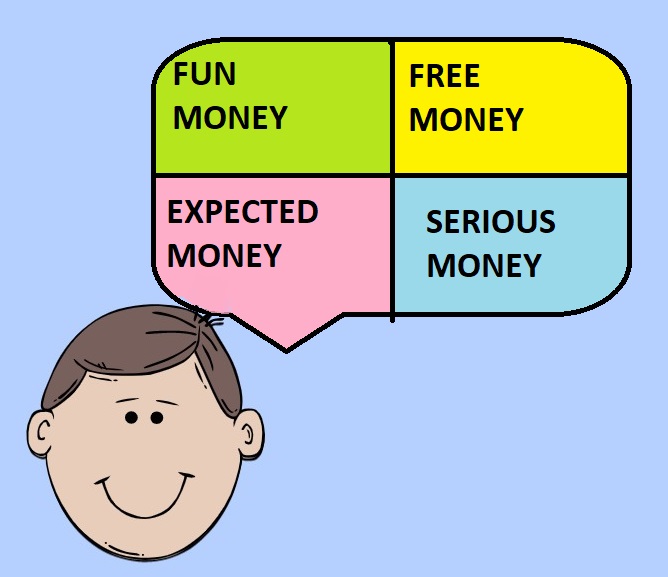
When you separated money on basis of nature of money:
- Fun Money
- Free Money
- Expenses Money
- Serious Money
But,
What should be the real and logical separation of Money:
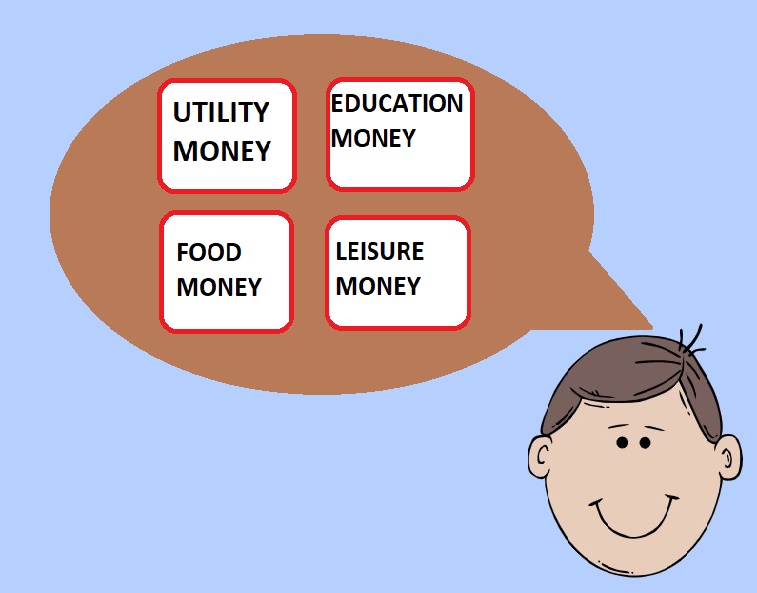
- Utility Money
- Rental Money
- Food Money
- Reserved Money
So,
At the end I would only say that you should track down your all expenses, and get out of debt and find an accountability partner.
And Its better to understand your financial goals and financial management as early as you can.
Thank you.
Please motivates me to write more by sharing.
My other Blogs:
1. Early Retirement : https://www.financechartered.com/2019/06/earlyretirement.html
2. How to Save Money : https://www.financechartered.com/2019/05/how-to-save-money-in-2019.html
Some Financial Advice :
- Academy of Mutual Funds : https://learn.finology.in/courses/finance/mutual-fund-course?finref=T6D6WJ
- Academy of Value Investing : https://learn.finology.in/courses/finance/academy-of-value-investing?finref=T6D6WJ

 Finance Chartered